
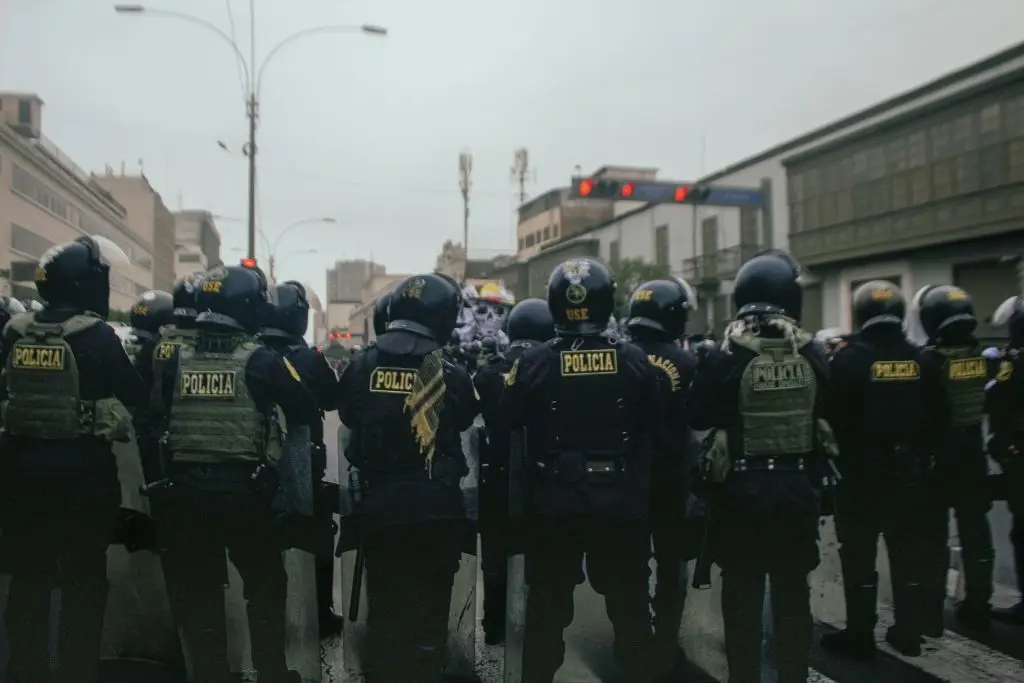
Every living system, from a single cell to a global empire, expands until it encounters resistance. This principle is deceptively simple, yet it explains why empires collapse, why ecosystems shift, why personal habits plateau, and why economies implode. It is not a metaphor. It is a law of living systems.
Life expands. That is its nature. Organisms seek food, reproduce, and spread. Businesses chase markets. Nations pursue influence. Ideas propagate through networks. But unchecked growth always collides with boundaries. These boundaries may be physical (resources), biological (energy limits), or cultural (social legitimacy). Expansion is not infinite. It is always conditional.
Robert Rosen, in his theory of anticipatory systems, argued that living systems model their environment in order to survive. They do not merely react—they predict. Expansion, then, is not blind. It is patterned, adaptive, and ultimately bounded. Systems grow until they meet resistance. Then they must adapt, collapse, or transform.
Hierarchies as Tension Managers
As systems grow, they generate complexity. To manage that complexity, life creates hierarchies. A small elite group, whether a chess club committee or the United Nations, is ceded or claims power to make decisions on behalf of the whole. The elite group control the narrative and set the necessary rules to ensure that everyone behaves in acceptable ways for the whole group to maintain coherence. If they set the rules, they must monitor them and ensure the rules are kept. This means rewarding compliance and punishing deviance from the accepted behaviours.
Groups or communities are not necessarily good. Groups can be formed to create harm and others mean well, but fall into harmful ways of treating their own people, or others outside the group. This elite formation is not inherently corrupt. It is structurally necessary. Someone must coordinate the flow of energy, information, and resources.
But hierarchies do more than manage growth. They absorb tension. They act as buffers between the expanding system and the resistance it begins to encounter. Over time, however, these elites can drift from the lived reality of the base. The legitimacy of the elites erodes. The elite becomes insulated, and the system becomes brittle. This is the beginning of symbolic drift, a warning signal that resistance is rising.
The longer this drift continues, the more fragile the system becomes. Legitimacy is not a fixed asset. It must be renewed. When elites fail to adapt, resistance intensifies. What begins as murmurs of discontent can become rupture. The system no longer bends. It breaks.
Biological Analogies: Resistance as Sculptor
Biology offers countless examples of this principle. Muscles do not grow without resistance. They tear microscopically under strain, then rebuild stronger. The immune system calibrates itself through exposure to pathogens. Forests regenerate after fire, but only within the limits of soil, water, and light. Resistance is not failure. It is the sculptor of resilience.
Consider the forest. After a fire, new growth multiplies rapidly. Light floods the forest floor. Nutrients are abundant. But over time, the canopy closes. Plants compete for sunlight and water. Growth slows. A dynamic equilibrium emerges—one that can sustain the most life over time. But if the balance is disrupted—by drought, disease, or human intervention—the system shifts again. Resistance reasserts itself.
The same is true of coral reefs, grasslands, and even the human gut. Expansion is always temporary. Stability is always negotiated. And resistance is always waiting.
Diminishing Returns and the Ladder Problem
The law of diminishing returns captures this elegantly. We pick the low-hanging fruit first. It is easy, obvious, and rewarding. But once it is gone, we need ladders. We must climb higher, invest more energy, and take greater risks. Eventually, the cost of picking the fruit outweighs the benefit.
Oil is a perfect example. Early oil was found seeping from the ground. It was cheap and abundant. Now we drill miles beneath the ocean floor, fracturing rock, risking spills, and destabilising ecosystems. The energy return on energy invested has plummeted. The ladder is wobbling.
This pattern repeats across domains. In agriculture, the Green Revolution boosted yields—until soil depletion, pesticide resistance, and water scarcity pushed back. In education, standardised testing expanded access—until it narrowed learning and eroded trust. In digital platforms, user growth drove innovation—until surveillance, addiction, and polarisation triggered backlash.
Every ladder has its limit.
Historical Cycles: Expansion Meets Collapse
History is a graveyard of systems that grew beyond their limits. The Roman Empire expanded until it could no longer sustain its infrastructure. It invaded the boundaries of others to maintain itself. But the further it spread, the more fragile it became. Eventually, the Goths and Vandals did not just invade—they filled the vacuum left by a system stretched too thin.
The British Empire fractured under colonial resistance, economic exhaustion, and the rise of global competitors. The Soviet Union collapsed not from invasion but from internal stagnation, ecological degradation, and ideological disillusionment. Even Silicon Valley, once a frontier of innovation, now faces resistance in the form of regulatory scrutiny, social backlash, and diminishing returns on scale.
The Song dynasty in China, once a beacon of innovation, overextended its bureaucracy and military. Its collapse was not sudden—it was a slow erosion of legitimacy, capacity, and cohesion. The same pattern played out in the Aztec empire, where expansion required constant warfare and tribute. When resistance came, it was swift and terminal.
Expansion always meets resistance. Sometimes it is slow and subtle. Sometimes it is sudden and catastrophic.
Modern Economies and the Myth of Perpetual Growth
Modern economies are built on the assumption of perpetual growth. GDP must rise. Markets must expand. Consumption must increase. But this is a fantasy. The 2008 financial crisis was a case study in resistance. Banks expanded credit far beyond sustainable levels. Housing markets inflated. When defaults began and trust collapsed, the system imploded. The absence of regulatory resistance allowed expansion to become destructive.
Climate change is another form of resistance. Fossil fuel economies grew unchecked for two centuries. Now the planet pushes back—rising temperatures, extreme weather, ecological collapse. These are not anomalies. They are feedback signals. The system has hit its boundary.
Even digital systems are not immune. Social media platforms expanded rapidly, optimising for engagement. But the result was not cohesion—it was fragmentation. Misinformation, outrage, and algorithmic manipulation became the resistance. Trust eroded. Regulation looms.
Cultural Denial and the Fear of Limits
Culturally, we are taught to see resistance as failure. Limits are framed as obstacles to be overcome. The myth of endless progress—fueled by consumerism and techno-optimism—blinds us to ecological and social thresholds. Denial becomes a coping mechanism. We accelerate toward collapse, mistaking resistance for injustice or inefficiency.
This denial is not accidental. It is structural. It is embedded in advertising, education, and political rhetoric. Growth is equated with virtue. Limits are equated with weakness. But this framing is suicidal. It disables our capacity to adapt.
We continue to live as though our planet can endlessly provide for our needs, even though there are clear signs all around that our current lifestyle is unattainable. We continue on our path until the planet resists—with floods, storms, fires, and extinctions. These are not punishments. They are signals.
Designing for Resistance: Feedback, Renewal, Adaptation
The challenge is not to eliminate resistance but to design for it. Systems that endure are those that integrate feedback, embrace limits, and renew themselves. Permaculture, regenerative economics, and indigenous governance models all reflect this wisdom. They do not seek to dominate nature but to participate in its cycles.
A resilient system is not one that avoids resistance. It is one that learns from it.
This requires a shift in mindset. From extraction to regeneration. From domination to participation. From linear growth to cyclical renewal. It requires humility, foresight, and design.
Rosen’s anticipatory systems offer a clue. If we can model the future—not as prediction but as possibility—we can build systems that adapt before collapse. This is not utopian. It is evolutionary.
Resistance as Intelligence
Resistance is not just a boundary. It is a form of intelligence. It tells us when we have gone too far, too fast, or too blindly. It tells us when legitimacy has eroded, when energy is depleted, when cohesion is fraying.
In this sense, resistance is not the enemy of growth. It is its teacher.
Muscles grow by tearing. Forests renew through fire. Cultures evolve through tension. The question is not whether resistance will come. It always does. The question is whether we will listen.
The Truth: Resistance is not a Flaw
Systems grow until they meet resistance. This principle explains why forests stabilise, why economies collapse, why muscles strengthen, and why cultures evolve. Resistance is not a flaw. It is a feature. It signals the need for adaptation.
If we design systems that anticipate limits, build feedback loops, and value renewal, we can create structures that endure. Growth without resistance is cancer. Growth with resistance is life.
The lesson is not to fear resistance, but to recognise it as the boundary condition of all living systems. It is the edge where expansion becomes evolution. It is the moment where systems either fracture—or transform.